Most frequently asked questions about Northern Lights
Nestled in the heart of Finland, the Jyväskylä Region is a great place to witness one of nature’s most breathtaking spectacles – the Northern Lights. From September to March, the area is a popular destination for northern lights enthusiasts, who come to see vivid displays against a backdrop of crisp, dark skies. Whether you want to see shimmering green curtains or capture their reflections on frozen lakes, the combination of accessibility, low light pollution and scenic landscapes in the Jyväskylä Region delivers unforgettable aurora experiences, without you having to venture all the way to Lapland.
What are the Northern Lights?
Northern Lights, scientifically known as aurora borealis, occur when charged particles from the sun collide with Earth’s magnetic field and atmosphere. These interactions produce breathtaking displays of shimmering lights across the night sky, most commonly in shades of green, but occasionally in purple, blue, and red depending on altitude and atmospheric composition.
While the Jyväskylä Region lies on the southern edge of the auroral oval, its location at 62°N latitude allows for regular aurora sightings during periods of heightened geomagnetic activity. Though not as frequent as in Lapland, the region offers rewarding viewing opportunities – especially during strong solar events.
Jyväskylä Region’s relatively low light pollution compared to major urban centres enhances visibility, and its surrounding lakes and forests provide scenic, unobstructed vantage points ideal for aurora hunting.
When is the best time to see Northern Lights?
The northern lights season runs from August to April, with peak viewing opportunities occurring between October and February. During these months, the combination of sufficient darkness hours and favourable weather patterns creates ideal conditions for aurora borealis Finland sightings. Statistically, the most active aurora periods occur from September to October and February to March.
Seeing the Northern Lights in Finland is optimal between 9 PM and 2 AM, when astronomical darkness provides the darkest sky conditions necessary to see aurora displays. The exact timing depends on the season, with earlier viewing possible during winter months when darkness arrives sooner.
Solar activity cycles also influence aurora intensity throughout these months. The sun follows an 11-year activity cycle, with peak years producing more frequent and intense displays. Even during solar minimum years, the Northern Lights remain regularly visible in the Jyväskylä Region thanks to its favorable latitude.

How can I predict the Northern Lights?
Maximise your northern lights viewing success by monitoring aurora forecasts, choosing clear nights with minimal moon interference, and positioning yourself in dark locations away from city lights. Preparation and patience significantly improve your chances of witnessing spectacular displays.
Aurora forecasting apps provide essential information about geomagnetic activity levels. The KP index measures aurora intensity on a scale of 0-9, with KP levels of 3-4 typically producing visible auroras in Jyväskylä Region. An app like Northern Lights Finland Alerts offers real-time predictions and alerts for increased activity periods.
What colors can you see in the Northern Lights?
The Northern Lights display a spectacular range of colors, with green being the most common and recognisable hue. Green auroras often appear as dancing curtains, arcs or spirals in the night sky, caused by oxygen molecules at altitudes of 100–150 km.
Purple and violet hues occasionally accompany green displays, formed when charged particles interact with nitrogen molecules at lower altitudes. These colours often appear at the lower edges of auroras, creating beautiful gradients from green to purple.
Blue auroras are rarer and typically harder to detect with the naked eye, but they can appear as fast-moving rays or accent colours within larger displays. Red auroras, the rarest of all, occur when particles collide with oxygen at altitudes above 300 km. These displays are usually seen during intense geomagnetic storms and can stretch high across the sky.
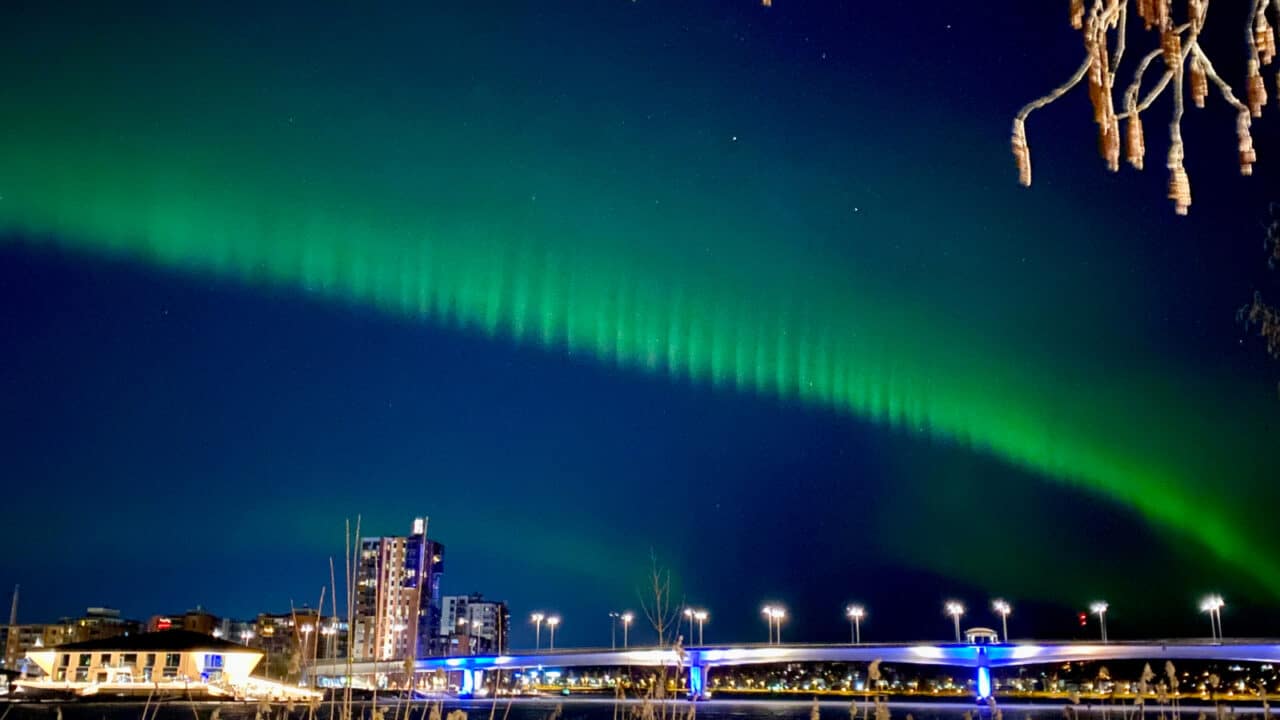
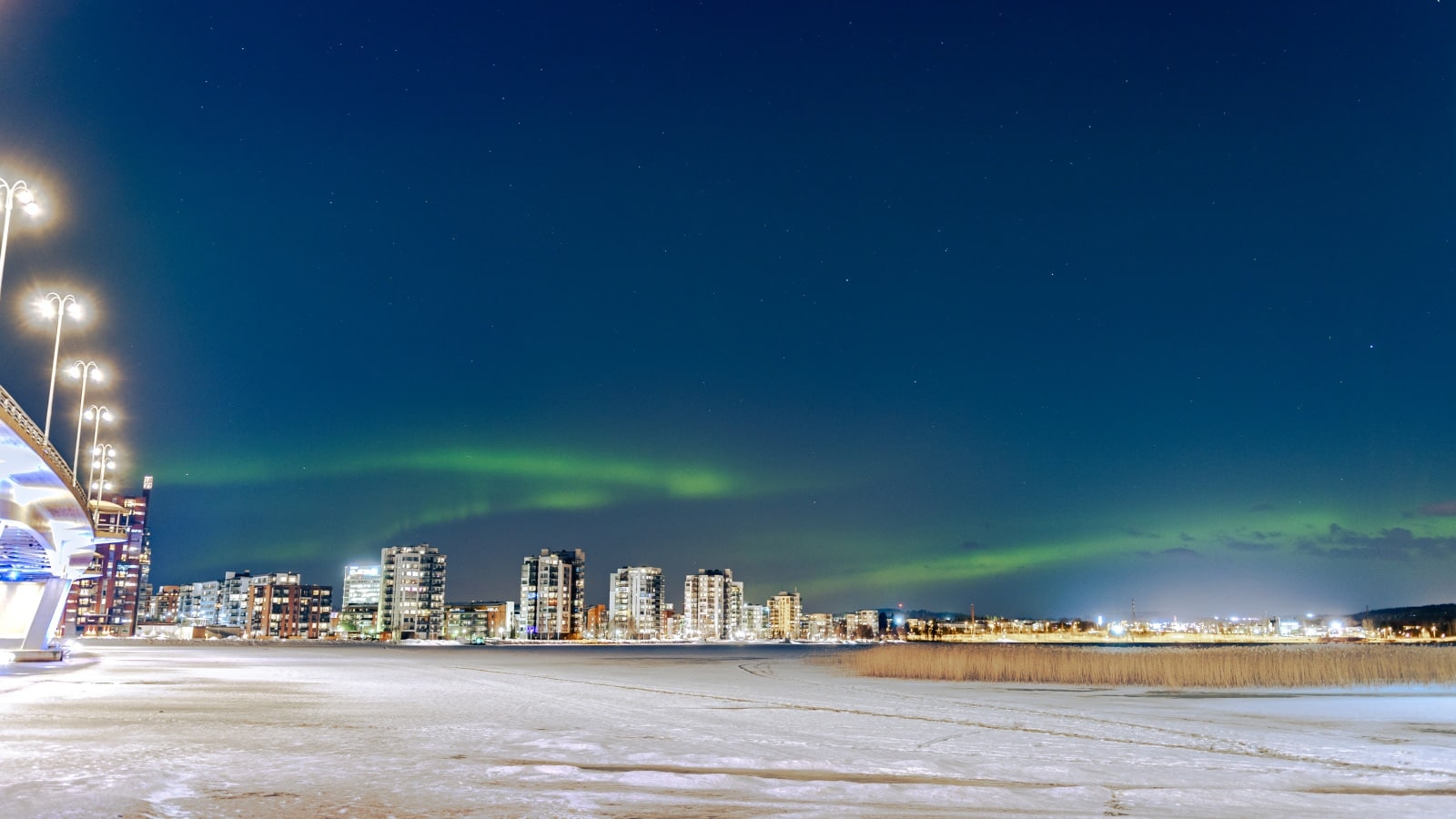
Northern Lights and Stargazing
The Jyväskylä Region offers excellent opportunities to see the Northern Lights and clear starry skies in the heart of Finland.
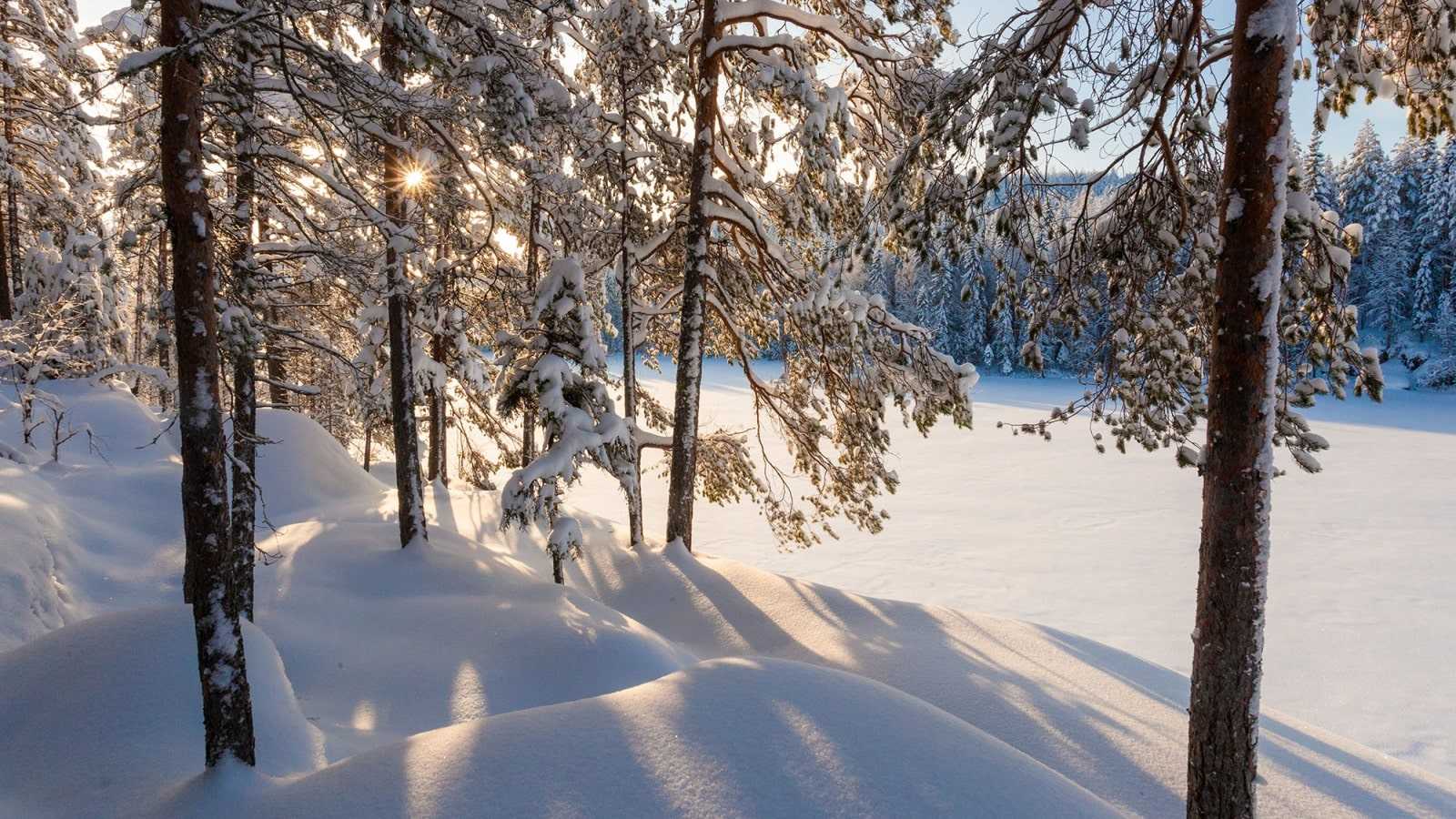
Vantage points
In the Jyväskylä Region, there are many wonderful nature sites with breathtaking views. Flee from the bustle of the city by climbing up Kanavuori Hill or take in the view from Laajavuori.

National Parks
Experience the diversity of Jyväskylä Region’s nature in our four national parks! The sights of our national parks, their towering boulders and deep blue lakes, will impress every outdoorsperson.